
Home Addition Pricing · Arizona
What a Home Addition Costs in Arizona
Real ranges from a licensed Valley builder, taken off our own completed projects. What it costs to add the room you actually need.
$50,000 – $500,000
Home additions start around $50,000 and run to $500,000.
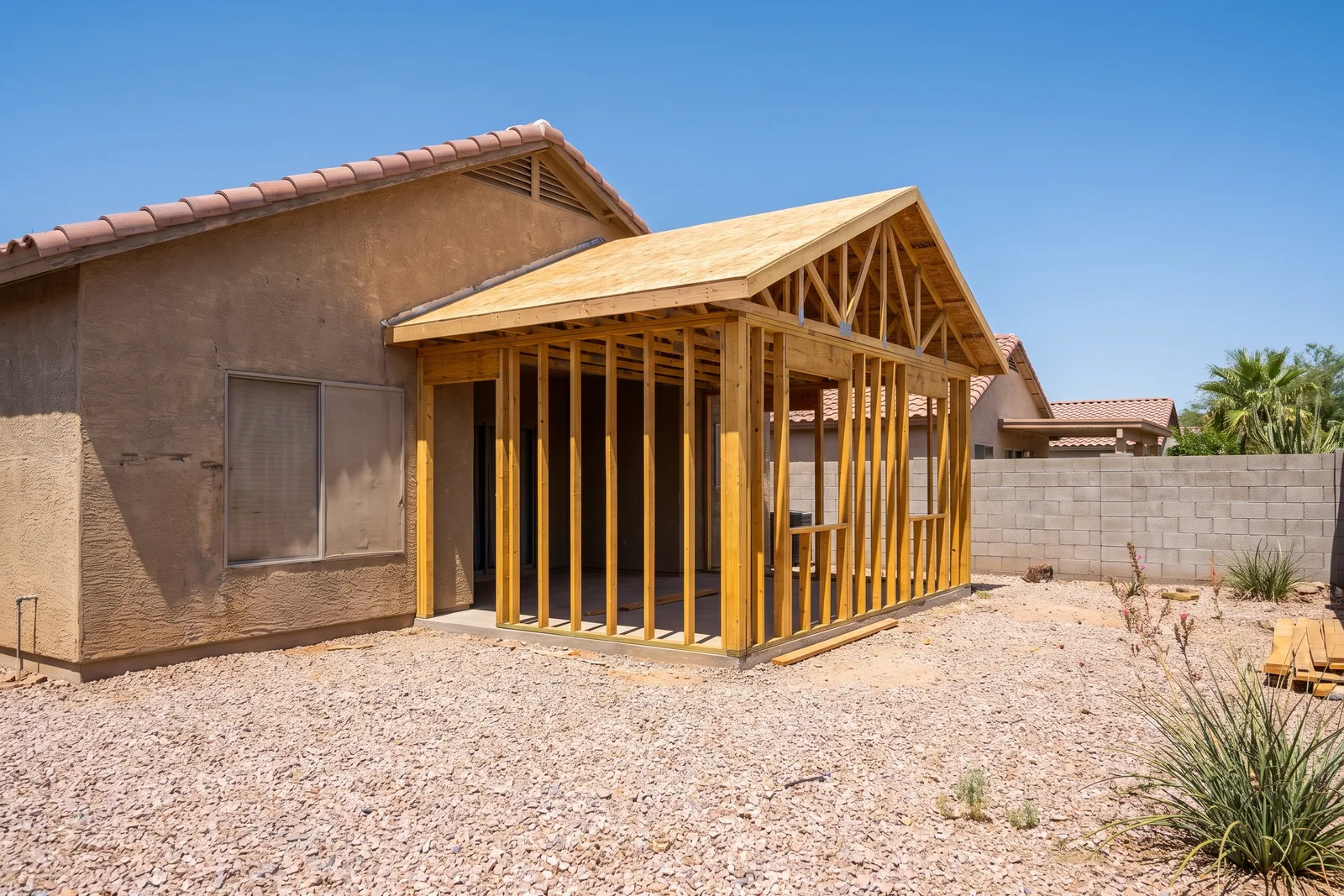
An addition means a new foundation, new framing, a roof tied into the existing one, and finishing that matches the rest of the house. Those costs arrive on every addition, which is why even a modest one starts where it does.
A home addition in Arizona costs $50,000 to $500,000 in Matson Signature Builders 2026 pricing. Size matters, but so does whether you build out or up, and how the new structure ties into the existing roof and slab. Additions require engineering, permits and usually HOA approval, which adds eight to sixteen weeks before construction.
Why we published this
More space without moving, and what that actually costs.
An addition is often the better answer than moving. You keep your lot, your street and your neighbours, and you get the room you were missing.
The cost turns on three things: how big it is, whether it includes plumbing, and how cleanly it ties into the existing house.
That last one is the part people don't anticipate. Matching a roofline, extending systems, and making the addition look like it was always there is skilled work, and it's the difference between an addition and a bolt-on.
What moves the number
What actually drives the price
Six things decide where an addition lands.
Size and room count
A bedroom-sized bump-out and a multi-room wing are different projects. Square footage drives foundation, framing, roof and finish quantities all at once.
Does it include plumbing
Adding a bathroom, wet bar or laundry brings supply, drainage and venting into the addition. It is the single biggest step-change in an addition's cost.
Tying into the existing house
The roof has to meet the existing roof, the stucco has to match, and the floor levels have to align. Doing that well takes structural work and skilled finishing.
Ground floor or second story
Building up means reinforcing what's below, adding stairs, and often reworking the existing floor plan. Building out means foundation and site work instead. Up is usually more involved.
Extending the systems
HVAC capacity, the electrical panel and sometimes the water heater all have to serve more house. Older systems occasionally need upgrading to carry the addition.
Level of finish
A primary suite finished to match a high-end home costs considerably more than a simple flex room, at the same square footage.
Placing your project
Where your build lands in that range
Here is how additions actually move through that range.
A room you were missing
A single-room addition on the ground floor without plumbing: an office, a flex room, a bedroom, or extending a living area. Straightforward tie-in, matched finishes.
A suite or a wing
A larger addition including a bathroom, often a bedroom suite or an expanded living and kitchen area. Plumbing, more complex roof tie-in, and systems work.
A major expansion
Multi-room additions, second stories, or an addition that reshapes how the whole house works. This overlaps with a whole-home remodel and is planned like one.
Bringing it down
What lowers the cost
If the number is higher than you hoped, these are the honest levers.
Build out, not up
Where the lot allows, a ground-floor addition usually avoids the structural reinforcement and stair work that a second story requires.
Skip the plumbing
If the room doesn't genuinely need water, leaving it out avoids a meaningful step in cost and complexity.
Keep the roofline simple
A straightforward tie-in costs far less than a complex intersection of rooflines.
Site it near existing systems
Placing the addition close to the panel, the water heater and existing HVAC shortens every run.
Stay inside your setbacks
Designing within what your zoning already allows avoids variance applications, delay and uncertainty.
Match rather than upgrade
Matching existing flooring and trim is usually far less expensive than replacing them throughout the house for continuity.
Approvals
Setbacks, lot coverage and your HOA
Your city decides where on the lot you can build. Setbacks from property lines, maximum lot coverage and height limits all constrain an addition before design begins. These are the first things we check.
Your HOA is separate, and many Valley HOAs review exterior changes. Matching stucco, roof tile and colour is usually what gets an addition approved smoothly.
Structural engineering is required where the addition ties into the existing structure, and the work is permitted and inspected. We handle all of it.
Questions
Home Addition Cost, Questions Answered
What does a home addition cost in Arizona?
Our home addition projects run $50,000 to $500,000. A single ground-floor room without plumbing sits near the bottom. A multi-room addition or second story sits at the top.
Will the addition match the rest of my house?
That's the whole point. We match stucco, roofline, roof tile, paint and finishes so it reads as part of the original home rather than something added on.
Is it cheaper to add on or to move?
It depends on your market and how much you like where you live. If you love the lot and the neighbourhood, an addition is usually the better value once moving costs are counted.
Can we live in the house during construction?
Usually yes. An addition is built largely outside the existing walls until the tie-in, which makes it one of the easier project types to live through.
Do I need a permit for an addition?
Yes. Additions are permitted and inspected, and they require structural engineering where they meet the existing house. We handle the permitting.
How long does an addition take?
Design and engineering, then permitting, then construction. Timelines vary by city and scope, and we'll give you a realistic one for your jurisdiction up front.
Will my HOA allow it?
Many will, provided the exterior matches. We check your CC&Rs and handle the architectural submittal before design is finalised.
Does an addition add value to the home?
Usually, particularly when it adds a bedroom or bathroom and is finished to match the rest of the house. We won't quote you a return figure, because that depends on your street and the market at the time you sell.
Find out what your addition would cost.
Tell us about the room you need and where you'd like it. We'll check your setbacks and give you an honest range.
A note on these numbers. They come from home addition projects Matson Signature Builders has actually built across the Valley, at 2026 material and labor costs. Every lot, house and HOA is different, and the only honest price for your addition is one that comes from a defined scope and a site visit. Licensed Arizona contractor, ROC 336562. Last updated August 2026. We review this page every year.
Related reading
Last updated August 2026 · Matson Signature Builders · Licensed Arizona contractor ROC 336562